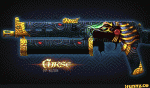
CS: GO is a classic example of an eSport game that also features microtransactions. It was released in 2012 and launched at $14. 99, a cost which doesn't qualify as free-to-play, but is small relative to the $50 to $70 price tag of most big games.
Its high-budget counterparts free cs go skins such as "Call of Duty" and "Halo 4" outpaced CS: GO, and its player base began to slide until the company introduced something completely cosmetic that added a new aesthetic flair to the game.
CS: GO is a first-person player with the dice that introduced skins for its guns. This added an entirely new economic dynamic to the game. At the end of each game, players were awarded with random crates of weapons, and they could only be opened with a key that cost $2. 49. Once the crates were opened, players would get multiple random weapon skins or rare items.
|